The Dental Practice Shenfield
  • Home
  • About
    • Meet The Team
    • Our Laboratory
  • Treatments
    • General Dentistry
    • Cosmetic & Restorative Dentistry
    • Preventative Dentistry
  • What Patients Say
  • Plans & Fees
  • Get In Touch
Picture

Preventative Dentistry

Picture

HYGIENIST SERVICES


With five oral hygienists in our team, we wish for all our patient to benefit from regular scale and polish to keep their oral health in tip top condition.  Your hygienist’s key aim is to prevent and treat gum disease, which is now one of the leading causes of tooth loss in adults. By including regular professional teeth cleaning in your oral routine, you can help to prevent gum disease and tooth decay.

Why do I need to see a dental hygienist?
Regular visits to your hygienist put you in the best position for detecting any oral health problems before they become symptomatic or require treatment.
​
Hygienists are trained to thoroughly clean your teeth and gums. Even the best electric toothbrush can’t reach every part of your mouth, and a hygienist can get to those hard-to-reach places to provide a professional deep clean. While you will leave your hygienist appointment with a fresher, cleaner smile, their job goes far beyond the superficial. A scale and polish will remove harmful plaque and deposits of tartar that, if left, can cause periodontal (gum) disease. By making a hygienist visit part of your dental care regime you can stay one step ahead and avoid becoming one of the 19 out of every 20 people who will suffer from gum disease during their life.

What can I expect from a hygienist appointment?
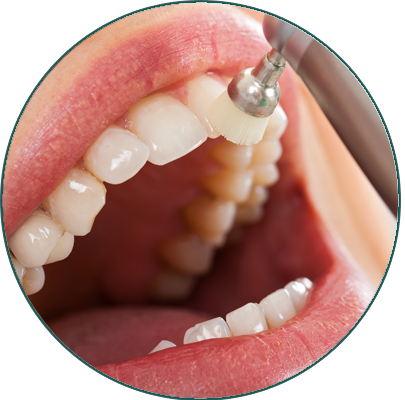
An appointment with your hygienist will involve an initial oral hygiene check-up, followed by a ‘scaling’ procedure. This is where any build-up of harmful plaque and tartar is carefully and gently removed from the surface of your teeth and around the gum line using scalers and curettes, which are specially designed tools to check scrape away soft deposits. 
Hand-held mirrors help your hygienist to spot those missed areas and pinpoint plaque build-up. Following a good clean and analysis of overall gum health, they will give your teeth a shine and polish with a gentle, quiet air polisher to remove any superficial stains. In cases where there is decay, a hygienist may apply fluoride or an antibacterial gel.
​

Tackling tooth fissures
Tooth fissures are tiny pits and grooves that appear on the surface of teeth and are extremely common, especially on the back teeth and molars. It is easy to miss these narrow fissures with normal brushing, meaning that bacteria can build up in the gaps and lead to deterioration of your tooth. Fissure sealants are a quick and comfortable preventative measure that can be applied by your hygienist to prevent tooth decay. Your hygienist will be able to advise you if this is a treatment they recommend for your teeth.

Complete oral care
Prevention is better than cure and identifying early signs of tooth decay or gum inflammation enables your practitioner to address the problem swiftly.

As well as a thorough scale and polish, your dental hygienist will also provide a complete check of your overall oral health. Your hygienist will get to know you and provide you with tailored, individual advice on how to maintain the best oral health, from diet to dental care
Picture

FISSURE SEALANTS


Sealants can protect adults and children’s back teeth, to help prevent the need to have fillings in the future. They are a protective composite coating, which are applied to the chewing surfaces of teeth at risk of decay. The chewing surfaces of back teeth have small grooves or fissures which often extend right down into the tooth itself. However well the teeth are brushed, these fissures are very difficult to clean thoroughly. Bacteria and food particles stick to them and eventually cause decay. Fissure sealants completely seal off these grooves, preventing any food particles or bacteria from getting in. They do not affect the normal chewing function of teeth.
Picture

NIGHT GUARDS


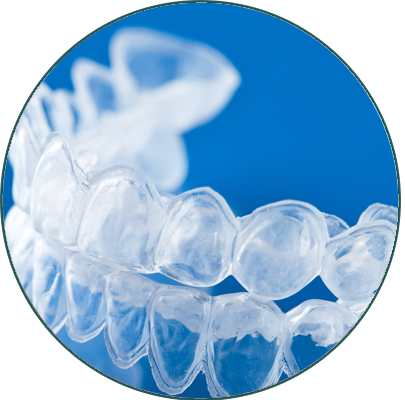
An effective night guard will consistently prevent grinding from further damaging your teeth and the condyles of your jaw joints.  Night guards absorb and disperse this force, protecting the enamel in your teeth from wearing down. Having this barrier between teeth can also relieve the tension in your jaw muscles from clenching so hard.

An impression is taking of your lower jaw, after your muscles have been relaxed, you will sit in an upright position and the way your teeth meet and form the impression is a vital factor in the effectiveness of your custom-made night guard.  This is then constructed in our in-house laboratory, and ready for fit within a few days.

Our patients whom have been wearing them, can’t go to sleep without theirs.  We do describe it as the best “anti-aging device for your teeth”.  You will prevent deterioration of your mouth, you will protect any reconstruction work you have had done, and your muscles will be relaxed in the morning.
Picture

SPORT GUMSHIELDS


A mouthguard is tailormade to you. It provides a protective cover which fits exactly over your teeth and gums to cushion and protect your teeth, gums and jaw from damage. Our orthodontists are expertly trained to craft the most comfortable mouthguard for your needs.

Why would I need a mouthguard?
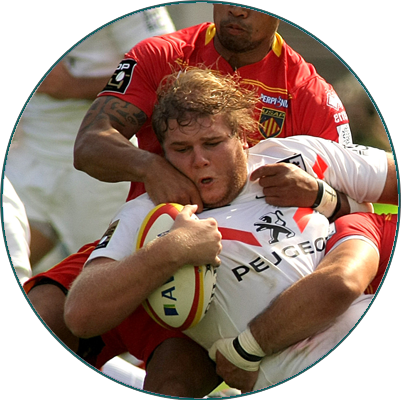
It is advisable to wear a professionally made mouthguard if you play sports such as rugby, cricket, hockey and football. Impact to the face, either from a ball or another player, can cause shock waves to travel through your jaw leading to bone damage, or a direct hit can shatter or chip a tooth. In fact dental injuries are a common occurrence in these kinds of sports. A mouthguard will not help prevent chipping or breaking teeth as a result of impact, it will act as a shock absorber to help protect against a painful broken or dislocated jaw.

Mouthguards can also be custom made to wear at night if you are susceptible to clenching or grinding your teeth (bruxism).

​A mouthguard will not cure your bruxism, but if you have come to your dentist for guidance and advice on teeth grinding, they may offer a mouthguard as a method to provide relief from the pressure and the sound while you explore the causes.

The application of a mouthguard will even out the pressure across your jaw as well as provide a barrier between your bottom and top teeth. The soft material means that it reduces wear on your teeth and also helps to diminish the grinding sound.
The making of a mouthguard
Your dentist will make your mouthguard to fit the exact shape of your jaw, ensuring that it stays in place comfortably, provides maximum protection and lasts for as long as possible.

Your dentist will take an impression of your teeth from which to make the finished guard. This first impression is used to make a complete plaster cast model of your jaw, gums and teeth. They shape the mouthguard material around the model to create a part that fits snugly over either your upper teeth. Your model is used to make sure that the bite is as comfortable as possible and make small adjustments until the mouthguard is at a stage ready for you to pick it up. .   

Maintaining your mouthguard
  • Scrub your mouthguard after every use with a soft toothbrush and toothpaste.
  • Keep it in its protective case when you are not wearing it.
  • Mouthguards are plastic, so keep it out of very hot water and the sun – these will cause it to melt and deform.
  • Make sure you regularly replace your mouthguard, not only for good hygiene but also to update it as your teeth naturally change and move.

​A strong, durable mouthguard could last you years but, of course, the lifetime of your mouthguard depends on how well you care for it, and whether it takes any blows from your sporting activities. On average a mouthguard will last around six months to a year. If your teeth are still moving or coming through, then it is important to get your mouthguard replaced more regularly to ensure that it fits correctly.
​
To get a custom made mouthguard contact us to have it ready before the start of your sport season.
Picture

SNORE APPLIANCES


There are 15 million snorers in the UK but it affects almost twice as many – that’s a partner whose sleep is being disturbed every night.

Snoring may be a commonly dismissed problem, but it should be tackled professionally, as with any other ailment, as soon as you’re aware of it. Snoring can impact yours and your partner’s daily life. In the short-term it can lead to stress and excessive tiredness, and the longer snoring is in an issue, the greater effect on your overall health and well-being.
Do discuss your concerns with your dentist regarding available treatments as soon as you are aware of the problem. Snoring can sometimes be an indicator of other health conditions and if left untreated, can contribute to further conditions such as stress, cardiovascular disease, depression and irregular heart rhythms.

Why do we snore?
Snoring is quite simply a vibration. While you’re asleep your air passages relax and narrow, which leads to a change in air pressure and causes the soft tissue in your neck and head to vibrate. Your lower jaw and tongue can also drop back during sleep and restrict your airways. When airflow to the body is restricted, your lungs begin to draw air in at a higher velocity to compensate. Increasing airflow in this way, to feed the body an adequate amount of oxygen, causes this tissue vibration that we hear as snoring.

Do I snore?
Snoring can affect anyone of any age, and about one in four people in the UK snore. It is most common in adults aged between 40-60 years old.
​
You may not be aware that you snore until someone tells you. Even if you wake up in the night, as is common, it may be tricky to associate the sleep disturbance with snoring, especially as it will stop as soon as you’re awake. If you have a partner, it usually falls to them to alert you to a snoring problem – it will be their sleep that you are also disturbing.
Snoring is a chronic condition and can not only indicate health problems but can affect your day-to-day life and cause further issues. Snoring, even if you are unaware of it, can lead to long-term sleep disturbance. This can make you tired and irritable during the day, it can affect your concentration levels, create mood swings and lead to an overall lack of energy. 
Bruxism (or teeth grinding) is also a sign that you may be suffering from snoring or sleep apnoea. When air flow is compromised, your body may respond to this by initiating grinding or clenching, which pushes the jaw forward and encourages you to take in oxygen again. If you snore you are also more likely to suffer from a dry throat and mouth, and headaches. These are all signs to watch out for.
Snoring can put a strain on relationships. Some couples accommodate problems with snoring by sleeping in separate rooms or going to bed at staggered times.
​

You are more inclined to snore if you:
  • Smoke
  • Drink heavily
  • Are overweight
  • Are taking antidepressants or medication with sedative effects
  • You have a cold or hayfever
  • Have a large neck (around 17in or more)
  • Suffer from sleep apnoea

Sleep apnoea
A more severe cause of snoring is obstructive sleep apnoea (OSA), a common condition that completely obstructs the airways and can leave you without breath for more than 10 seconds.

​Loud and prolonged snoring can be a symptom of sleep apnoea, and those suffering from it may also find themselves with laboured breathing. It may be that, while asleep, the breath is frequently interrupted by snorts or gasps. When your body is without oxygen, or a diminished amount, your brain receives a trigger to pull you out of deep sleep and resume normal breathing. This can happen repeatedly during the night.

Untreated sleep apnoea can put a strain on your heart, as it often results in higher blood pressure, and can lead to an irregular heart rhythm.

Anti-snoring remedy
We can provide a trusted anti-snoring solution and relief for anyone suffering from mild to moderate sleep apnoea. A custom made, comfortable fitting, mouth device worn in your mouth, which primarily works by gently keeping your airways open while you sleep by positioning your lower jaw forward.

If you or your partner suffer from sleep apnoea or snoring, contact us to discuss available treatment. Make an appointment today.
Picture

TMJ / TMD


What is TMD and TMJ?
The diagnosis is crucial in understanding and treating the problem and will involve ranges of motion, X-rays and possible Magnetic Resonance Imaging (MRI).
Treatment can involve wearing splints and functional braces to expand the arches, realign the jaw into the correct position and straighten the teeth.

Your temporomandibular joint is the hinge that connects your jaw to your skull – it is this joint that enables the movement of your jaw up and down and left and right, to allow for chewing, yawning and talking. Any problems that occur with this particular part of the skull are given the name temporomandibular disorders (TMD). These are also sometimes called TMJ dysfunction, referring to temporomandibular joint.

Pain in this part of your jaw is particularly common. Around 30 percent of adults will experience it at some point in their lifetimes, and usually it will go away of its own accord.

Symptoms of TMD/TMJ
  • Muscle pain in and around your jaw
  • A clicking or popping sound as you chew or move the jaw
  • Pain in front of your ear that may move to your cheek and temple
  • Headaches and migraines
  • Earache, a buzzing sound or a blocked feeling
  • Tight or locked jaw
​
Pain in your jaw
For those who suddenly develop pain in this area, it is difficult to determine the cause. Usually the symptoms of TMD are short-lived, and in most cases any pain will disappear of its own accord. TMD can be caused by bruxism (clenching and grinding of the teeth and jaw) or an uneven bite. Wear and tear to the internal joint can cause pain and irritation, and you may even find that you are holding tension in your jaw due to stress. Sometimes TMD may be easily identifiable as the direct result of an injury, such as following surgery or an external blow to the jaw, or a specific disease such as arthritis, gout or fibromyalgia.
Assessing your jaw
You dentist will feel your jaw as you open and close it to assess the range of movement. They may press on the sides of you face and cheek to check for any pain when pressure is applied. Following this an x-ray or CT scan may be required to provide a comprehensive view of your entire jaw and teeth, and to see if there is any visible damage.

What you can do at home
Should you be experiencing irritation from TMD, there are a number of adaptations you can make to make your life more comfortable until the pain subsides.

In practice procedures
Your dentist will discuss your concerns and history of TMD. Should you come to us with persistent pain, they may offer you one of a range of options to tackle the problem.
Mouthguards can sometimes be made up specially to fit your mouth, in order to take the pressure away from any biting or grinding. If this is causing the problem, relieving the tension may help diminish the pain.
​
Painkillers such as ibuprofen, codeine or paracetamol can also help with the immediate pain. Your dentist may prescribe a stronger painkiller depending on your situation, this could be a muscle relaxant.  If arthritis is the culprit, then your dentist may suggest a steroid injection to help to reduce the swelling. In some cases, one injection can solve the problem completely.

For the correct diagnosis do make an appointment to see Dr. Rossouw as soon as possible.
Complaints procedure
Copyright © 2025 Portman Healthcare.
The Dental Practice is a trading name of Portman Healthcare Limited registered in England and Wales:06740579. Registered office: Rosehill, New Barn Lane, Cheltenham, Glos, GL52 3LZ.
Portman Healthcare Limited is an appointed representative of Product Partnerships Limited which is authorised and regulated by the Financial Conduct Authority. Product Partnerships Limited’s FCA registration number is 626349 and its address is Second Floor, Atlas House, 31 King Street, Leeds LS1 2HL. Product Partnerships Limited’s permitted business is to act as a Principal for a network of Appointed Representatives who arrange regulated credit facilities for customers who are purchasing goods from them.

Portman Healthcare Limited (FRN: 1031516) acts as a credit broker not a lender. We can only introduce you to Secure Trust Bank T/A V12 Retail Finance Limited (FRN: 679653) who may be able to offer you finance facilities for your purchase. We will only introduce you to this lender. We do not receive any commission for introducing customers to a finance provider. Credit is provided subject to affordability, age, and status. Minimum spend applies. Not all products offered by Secure Trust Bank PLC are regulated by the Financial Conduct Authority.

Picture
The Dental Practice Shenfield   |   40 Hutton Road   |   Shenfield   |   CM15 8LB
Tel:  01277 233912   
Email: 
[email protected]

Opening Hours  |
  Monday - 8am - 4pm  |  Tuesday - 8am - 5pm  |  Wednesday - 8am - 6pm  |  Thursday - 8am - 5pm  |  Friday - 8am - 3pm  |  Saturday - By appointments only  |  Sunday - Closed
Picture
Picture

© Copyright 2023 The Dental Practice Shenfield. Site Last Updated December 2023.
Website Design by Designer Dental
  • Home
  • About
    • Meet The Team
    • Our Laboratory
  • Treatments
    • General Dentistry
    • Cosmetic & Restorative Dentistry
    • Preventative Dentistry
  • What Patients Say
  • Plans & Fees
  • Get In Touch